PSER Survey 2026
The Provincial Socio-Economic Registry (PSER) 2026 is a comprehensive initiative by the Punjab Government to identify and support low-income families across the province. The survey collects detailed information about household income, assets, education, health, and employment to ensure that financial aid and welfare programs reach the deserving families. With over 30 lakh households targeted, the PSER survey is a cornerstone for fair and transparent welfare distribution.
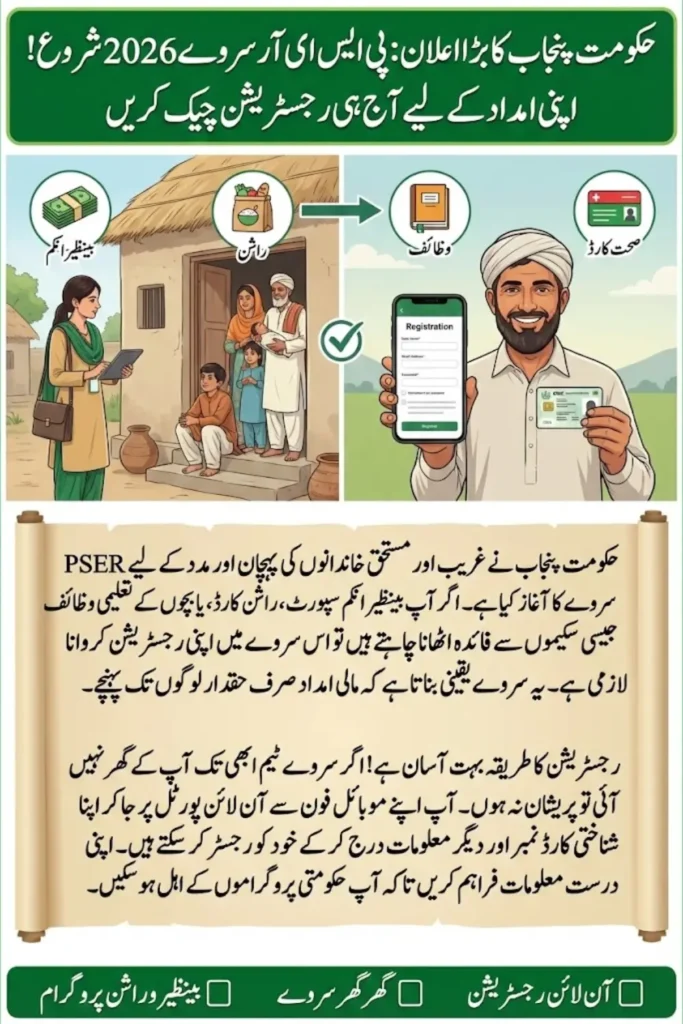
This program is crucial for families who want to access government assistance such as BISP cash transfers, CM Rashan Card subsidies, and Benazir Taleemi Wazaif scholarships. The survey is conducted through door-to-door visits by trained PSER teams, as well as online registration for households in remote areas or those who were previously missed. Families are encouraged to provide accurate information and necessary documents to ensure smooth processing.

How to Register for PSER Survey Online
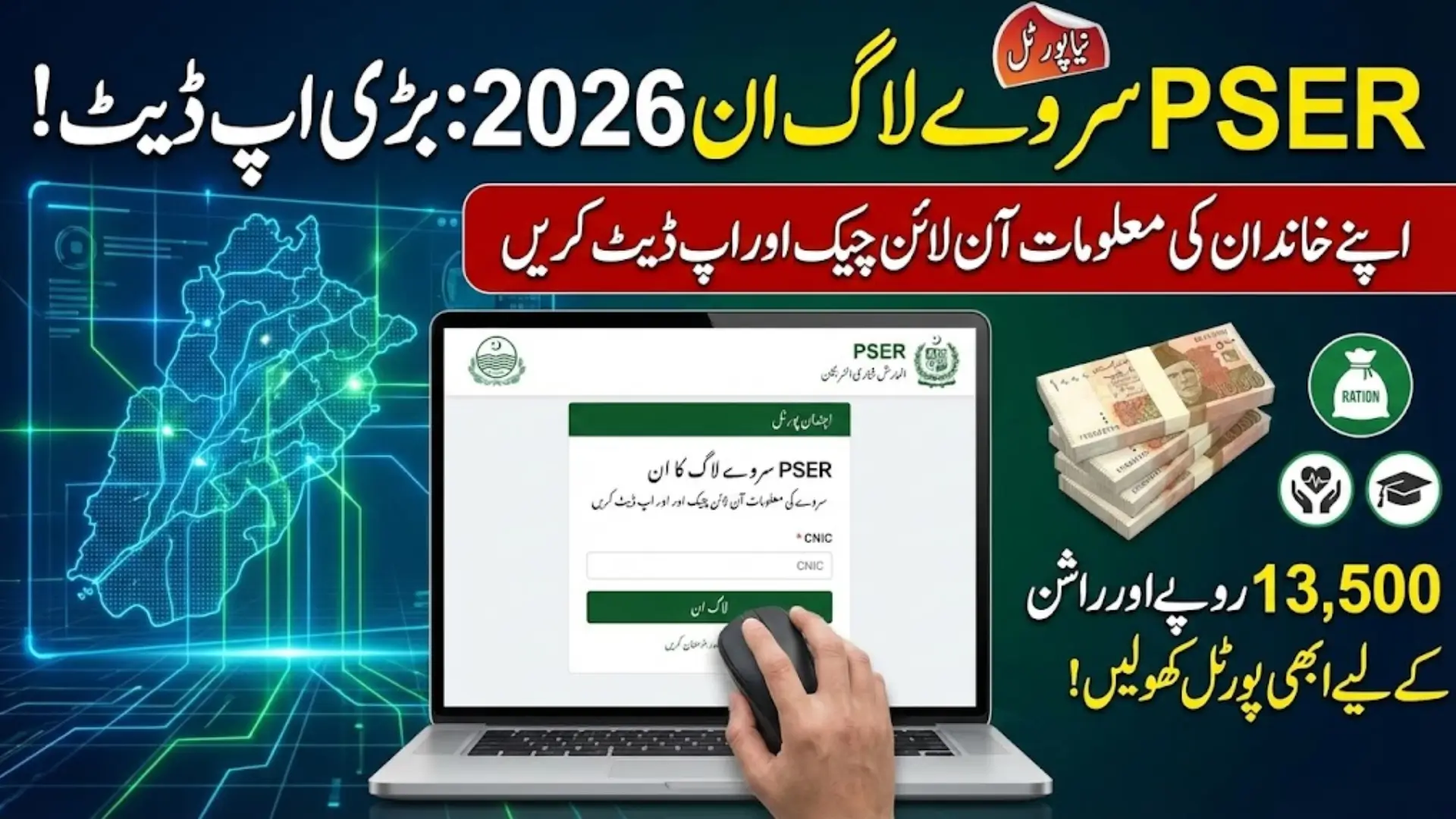
Online registration for the PSER survey is available for families who have not yet been visited by survey teams. The process is simple and user-friendly. First, visit the official portal at pser.punjab.gov.pk and enter your CNIC, mobile number, district, and tehsil. After creating an account, log in to complete the household survey form carefully.
The online form requests details such as family members’ names, CNICs, income sources, health status, education, and asset ownership. After submission, the data is verified by PSER officials and cross-checked with NADRA and BISP databases. Accurate submission ensures eligibility for multiple welfare programs and reduces the need for repeated field visits.

Key Information Required in PSER 2026
The PSER survey collects comprehensive details to determine household eligibility for various government programs. Key sections include:
- Personal information: CNIC, date of birth, gender, and relationship with family head.
- Health and disability status: Chronic diseases or disabilities such as mental, visual, hearing, or mobility-related issues.
- Education: Literacy level and highest degree attained.
- Employment and income: Primary occupation, monthly income, and bank account details.
- Assets: Property ownership, livestock, vehicles, cooking fuel, water source, and electricity connection.
- Agricultural information: Land ownership, cultivation type, and farm size.
- Miscellaneous: Past government aid, natural disaster impact, mobile/internet access.
Providing complete and truthful information is essential for accurate poverty scoring and access to welfare benefits.

Door-to-Door Survey Process
The PSER 2026 survey teams are equipped with digital tools, including tablets and mobile applications, to collect data efficiently. Officers wear official green jackets and carry ID cards for verification. During the visit, they will:
- Scan CNICs of all adult household members.
- Record family composition, income, and education.
- Assess household facilities, including electricity, water, sanitation, and cooking arrangements.
- Enter all data digitally in real time for immediate verification.
The door-to-door survey ensures that families in remote areas or previously excluded households are included in the registry. This process is entirely free, and no fees are charged.
Documents Required for PSER 2026
To complete the survey smoothly, families should keep the following documents ready:
- CNICs of all adult members.
- B-Form for children.
- Proof of income such as salary slips or pension books.
- Latest utility bills (electricity, gas, or water).
- Rent agreement or proof of property ownership.
- Family Registration Certificate, if available.
Having these documents ensures faster verification and avoids delays in eligibility for welfare programs.
Importance of PSER for Welfare Programs
Completing the PSER survey is essential for accessing multiple provincial and federal programs. Households not included in updated records may be ineligible for:
- BISP quarterly cash transfers (Rs. 13,500 for families with PMT ≤ 32).
- Benazir Taleemi Wazaif scholarships for children.
- CM Punjab Rashan Card or other subsidy schemes.
- Sehat Sahulat health cards for free hospital treatment.
PSER data integration with NADRA and BISP ensures fair distribution, prevents duplication, and enables targeted support for genuinely deserving families.
Online Self-Registration Steps
Families who prefer online registration can follow these steps:
- Visit https://pser.punjab.gov.pk.
- Enter CNIC, mobile number, district, and tehsil.
- Create an account with your details.
- Log in and fill the survey form with complete household information.
- Submit for review and verification.
Monitoring your CNIC status online helps track the registration progress, especially for households in remote or underserved areas.
Verification and Approval Process
After submission, PSER officials verify the data against NADRA and BISP databases. Each household receives a poverty score (0–100). Families scoring 32 or below qualify for most welfare programs. Eligible households are notified via SMS, and their names are added automatically to payment and ration lists.
This verification ensures that aid reaches only deserving families, minimizing fraud and duplication while promoting transparency in the welfare system.
Benefits of Completing PSER Survey 2026
| Program Name | Benefit | PMT Score Requirement |
|---|---|---|
| BISP Kafalat | Rs. 13,500 quarterly cash transfer | 32 or below |
| Benazir Taleemi Wazaif | Monthly scholarships for children | Mother’s PMT ≤ 32 |
| Ehsaas Ramzan Package | Subsidized food items during Ramadan | 40 or below |
| CM Punjab Rashan Card | Rs. 10,000 cash or ration support | 40 or below |
| Sehat Sahulat Card | Free hospital treatment | 32 or below |
Participation in the survey allows families to access multiple welfare programs without the need for separate applications, saving time and effort.
Conclusion
The PSER Survey 2026 is a vital tool for ensuring fair and transparent access to welfare programs in Punjab. By completing the survey accurately, families can secure financial aid, education support, health benefits, and food subsidies. Cooperation with survey teams, providing accurate information, and keeping documents ready guarantees smooth registration and eligibility for multiple government assistance programs.
FAQs
What is the purpose of the PSER 2026 survey?
To update household data and identify families eligible for government welfare programs.
How is the survey conducted?
Through door-to-door visits by trained PSER teams using digital tools.
What documents are needed?
CNICs, B-Forms, proof of income, utility bills, and property documents.




How can families register online?
Through the official PSER portal at https://pser.punjab.gov.pk.
What are the benefits of completing the survey?
Eligibility for BISP, Taleemi Wazaif, Rashan Riayat, Sehat Sahulat, and other provincial and federal programs.